Luis Steinhilber
DE EN ES

PortfolioCamera
& Editing

Stories unfold in the edit — that's exactly where I come in. Luis Steinhilber · 2026
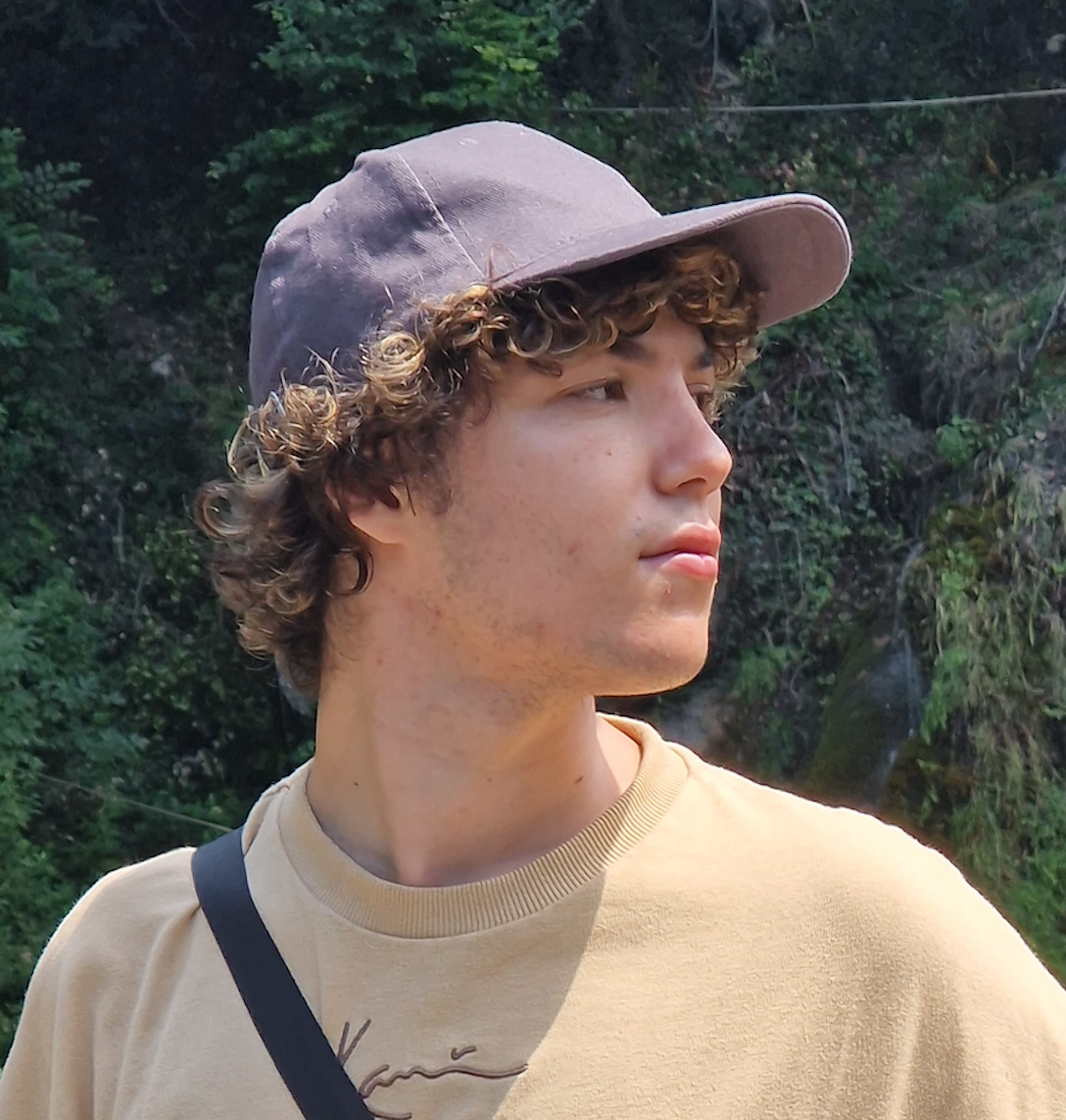
Portrait of Luis Steinhilber

About me

My name is Luis Steinhilber. I'm 23 years old, originally from Darmstadt, and I'm building up my skills as an aspiring media designer at Mainz University of Applied Sciences. Ever since childhood I've been driven to create films that stay with you. I haven't settled on my own style just yet, but one thing is certain for me: I'm passionate about entertaining films!   

My focus

My focus is on post-production:

In editing, colour grading and VFX, a film only truly unfolds its potential — and that's precisely what I'm specialising in on the Time-Based Media degree course. Even in times when AI is turning our media world upside down, I keep my eyes open for new and interesting fields and move with the times!

Selected work

My projects

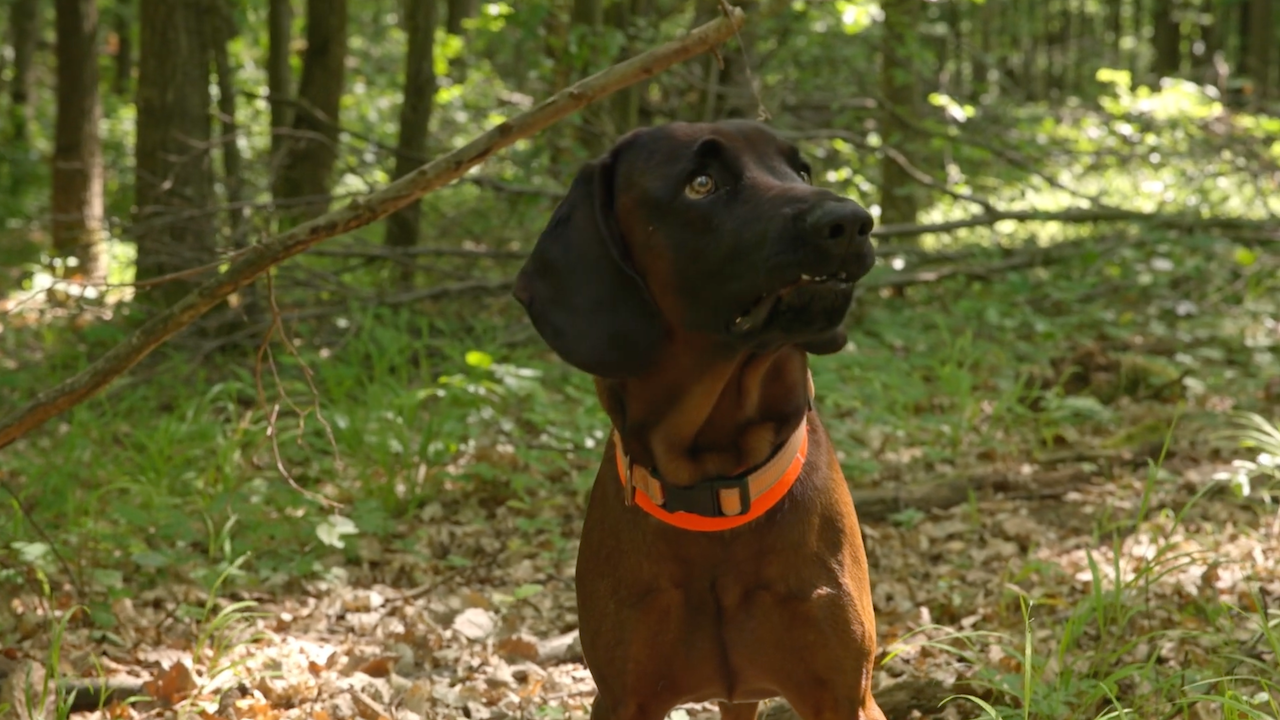
Still from the short documentary about foresters

Clicking loads content from YouTube · data is transmitted to Google

Camera · Directing · Editing

Documentary — Rhineland-Palatinate State Forestry

Why does a forester have to hunt animals?

Noah Weinbrecht answers this and other intriguing questions about his profession in this short documentary. Together with his hunting dog Joda, we head into the forests of Rhineland-Palatinate and document today's challenges in an age of climate change.

As part of the course "Camera Work for Documentaries", I took on both directing and camera at the same time.


June 2026
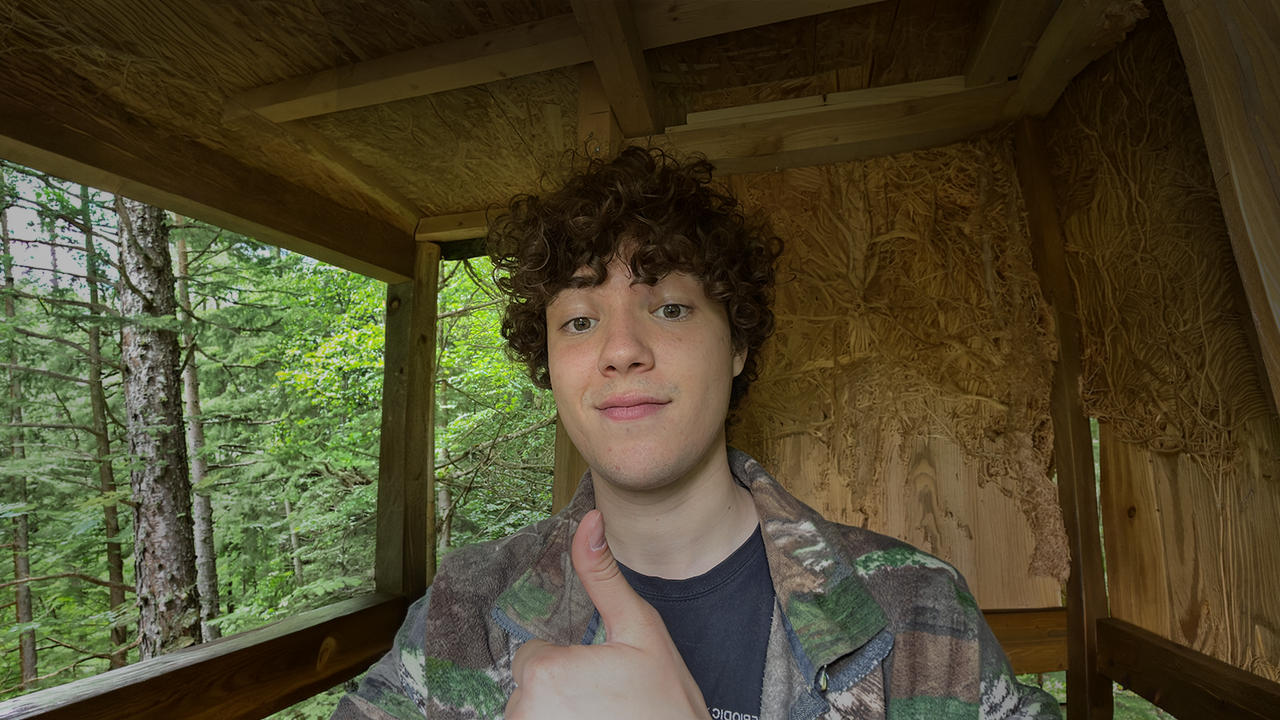
Portrait from the forest
Off into the forest

My first own documentary

Through Grischa Kerstan I got in touch with Jan Hoffmann from the Alzey State Forestry, who passed me on to Noah Weinbrecht. Noah set aside an entire working day and structured it so that as many topics and areas of his profession as possible could be documented. A huge thank-you to him and his planning, which plays a big part in the film's narrative thread! I filmed Noah and his hunting dog Joda on a Sony A7S III together with a Canon lens with a focal length of 28–135 mm. The required Metabones adapter meant that focus had to be pulled manually! As a result several takes were needed in some places, but it was all very manageable.

A day later I discovered four ticks, and a few days after that a large red patch, which meant I had to be treated with doxycycline for two weeks. All in all, though, I can say: it was great fun!

Production, Directing, Camera, Editing Luis Steinhilber
Forester and assistant director Noah Weinbrecht
Additional thanks Jan Hoffmann
Course leader Grischa Kerstan
"3 Forest Adventure" Timo Schniering
"An Eye for Details, Missing" Roman Dudchyk
"Eco Technology" Aleksey Chistilin
Camera Sony A7 S3
Lens Canon 24-70 mm; f2.8; AF EF-Mount
Adapter Metabones E- to EF-Mount
Sound Sony ECM-XM1 shotgun microphone and iPhone 13 Pro for ambient recordings
Still from the video CUPOHCHINO

Clicking loads content from YouTube · data is transmitted to Google

Camera · Editing

CupOhChino

A coffee at lunchtime? — A taboo for Italians!

Cultural quirks like this are what make us Europeans so unique! Despite our shared values, you can quickly and unexpectedly bump into taboos. It's exactly this cultural diversity that we pick up on with humour, turning an anecdote by Timo Schniering into a little sketch.

The project was made with Timo Schniering during an Erasmus stay in Beja, Portugal. I'm happy to show further projects from the Erasmus stay on request. 

March 2025
erasmus in beja, portugal

Um café, por favor!

In CUPOHCHINO, precise cuts are hugely important to build tension and let glances land. Timo was responsible for the colour grading and fine adjustments. I took care of the edit.

Veronika and I wandered through the streets of Beja asking people for a good café. By chance, a local introduced us to the owner of the Luiz da Rocha restaurant, who granted us permission to film the following day. We had two Sony A7S III full-frame cameras, a gimbal and a Dedolight. The nearby drama schools turned us down and our fellow students were busy with their own projects, so our professors stepped in as actors.

Camera 2x Sony A7 S3
Rig Gimbal DJI Ronin
Light 1x Dedolight
Post-production Davinci Resolve
Script, directing, music and editing Timo Schniering
Camera A and editing Luis Steinhilber
Sound design and on-set sound Pietro Giovanni Fanton
Camera B, set runner, waitress (cast) Veronika Bauermann
The German Daniel Seideneder
The Italian Maurilio Cacciatore
The Spaniard Paulo Ferreira-Lopez
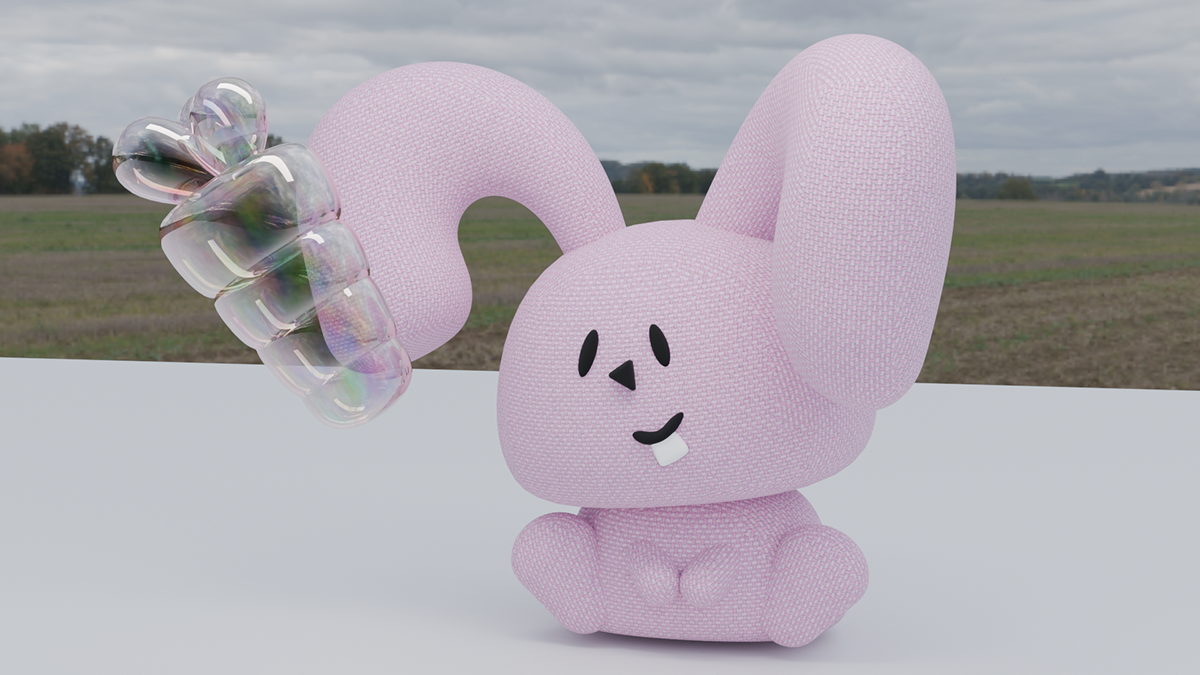
Still from the animation BoomBunny

Clicking loads content from YouTube · data is transmitted to Google

Production · Animation · Sound design

BoomBunny

First impressions can be deceiving. My first 3D animation packages this core message with humour. Inspired by an Instagram Reel featuring a cat and a balloon, I developed the concept and realised it in Blender.

The rolling hills were inspired by Beja, Portugal, which I visited during my Erasmus stay.

April 2026
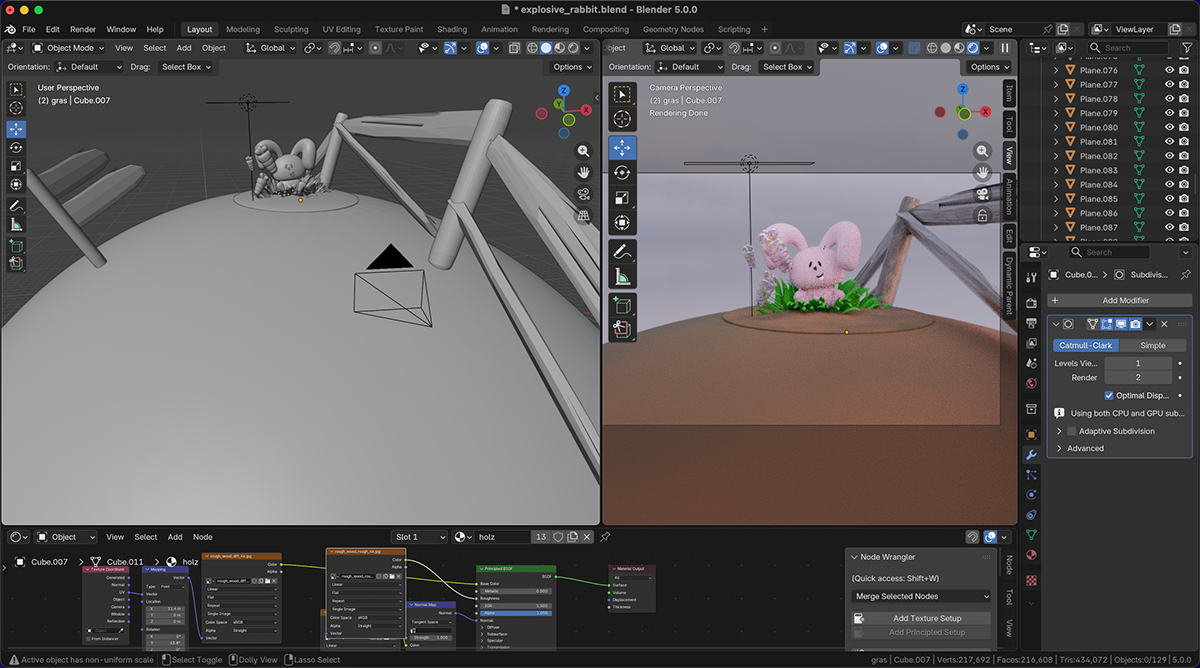
BTS photo 2
Step 1: Modelling

The rabbit was built using conventional modelling methods, following a YouTube tutorial by the channel SouthernShotty. To avoid a complete meltdown of my MacBook, I used a wool texture with a normal map instead of sculpting the rabbit's fur. The rabbit's face was animated with shape keys and a pivot point in the centre of the skull. Characters are normally given complex rigs, but this was quicker and sufficient for the short animation. There is, however, a skeleton running through the rabbit that uses inverse kinematics to align the bones naturally during animation, letting the ears swing about.

For the carrot I used a soap-bubble shader, implemented with the help of a YouTube tutorial by Blenderian.

BTS photo 1
Step 2: World-building and texturing

This is where the world was built for the first time. The nodes below define the material of the fence. For this I used a texture pack from the website polyhaven.com by 3D artist Amal Kumar.

The remaining objects — the hills, the grass and the clouds — were modelled by hand and shaped using shaders.

BTS photo 3
Step 3: Let there be light!

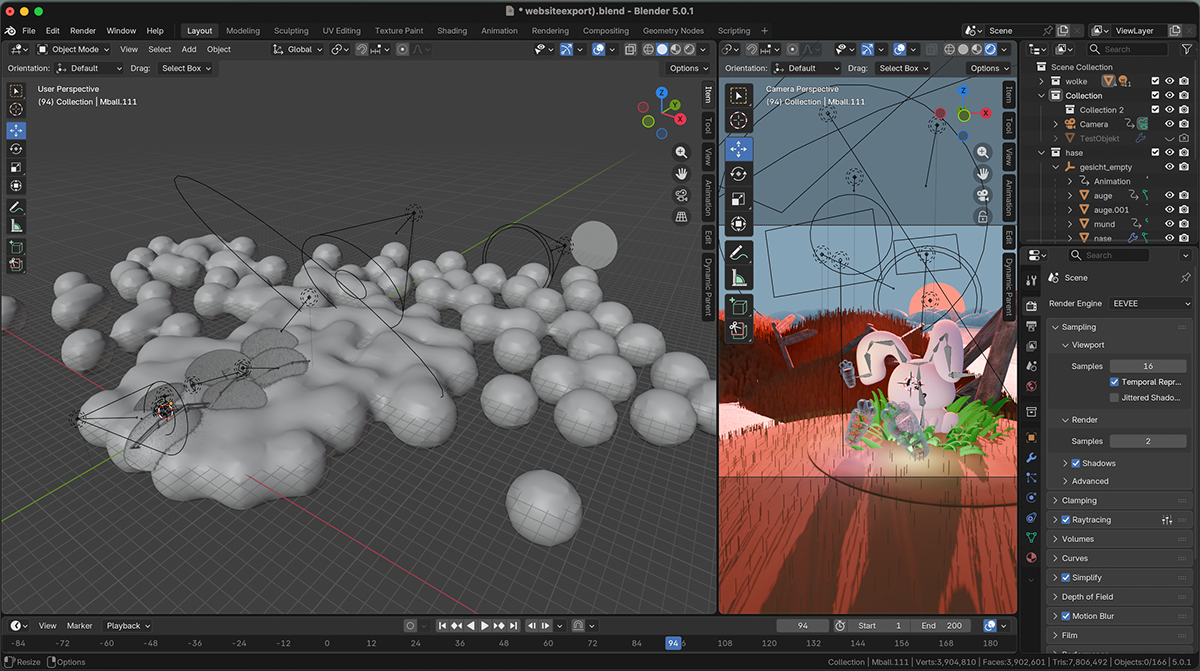
Alongside the shading, lighting is absolutely crucial to the look. It's what gives the film its impact and makes the objects stand out from one another. Since we want to reproduce a three-dimensional space on a two-dimensional screen, it's hugely important to fake that depth through visual layers. Contrasts in brightness and colour — such as complementary colours, shadows or a blue shift into the distance — create a sense of depth and are what make the image attractive and interesting in the first place.

In this screenshot, light sources are shown as a small sun or as light cones. The light cones mimic warm sunlight, while the small suns provide fill light, edge light and colour contrast in general.

BTS photo 4
Step 4: Keyframes, keyframes, keyframes

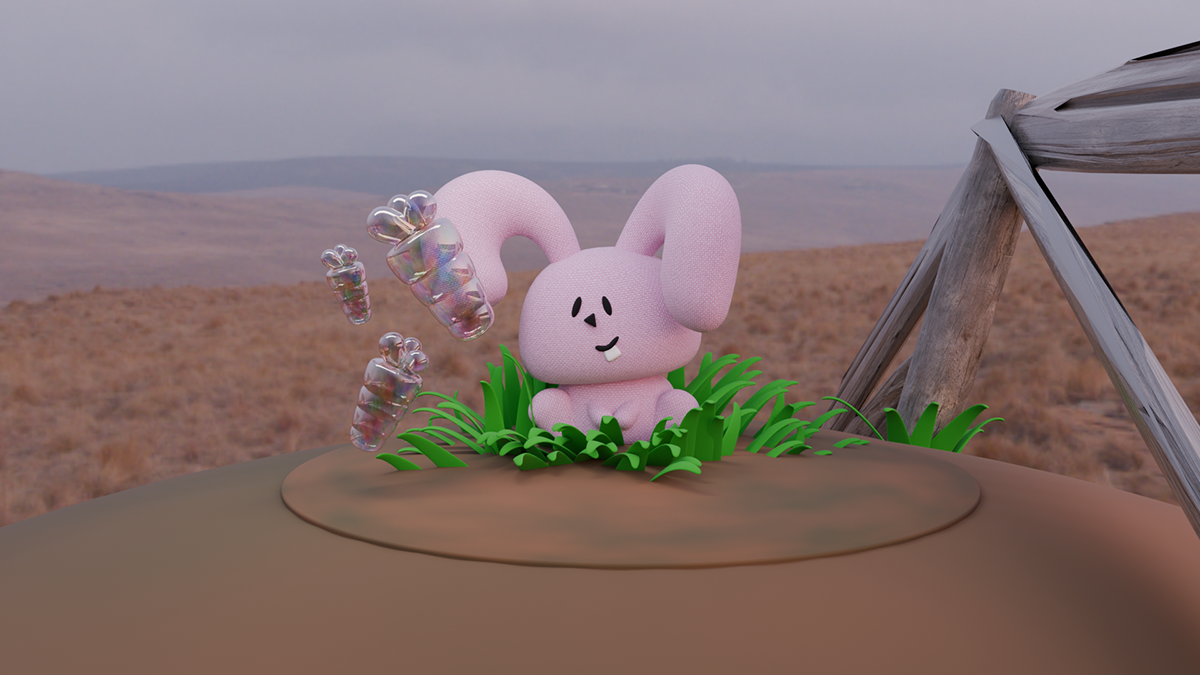
The rabbit was animated with shape keys on the face and standard keyframes for the rest of the body. Only the ears were solved with inverse kinematics. The animation took four weekends in total. The idea of the rabbit turning into a soap bubble only came up during the process. The Boolean operations for it really made the computer break a sweat, and the render time with path tracing came to almost 20 hours.

The final polish came through adjustments in After Effects such as colour, vignette, blur and a touch of film grain. The sound design was created in DaVinci Resolve and the music matched to the video. Timo composed the xylophones and strings that come in a few seconds after the soap-bubble carrots appear.

Concept, entire animation pipeline, sound design Luis Steinhilber
Music and emotional support Timo Schniering
Modelling, shading, lighting and animation Blender
Sound design and final compositing Davinci Resolve
Colour grading and VFX Adobe After Effects
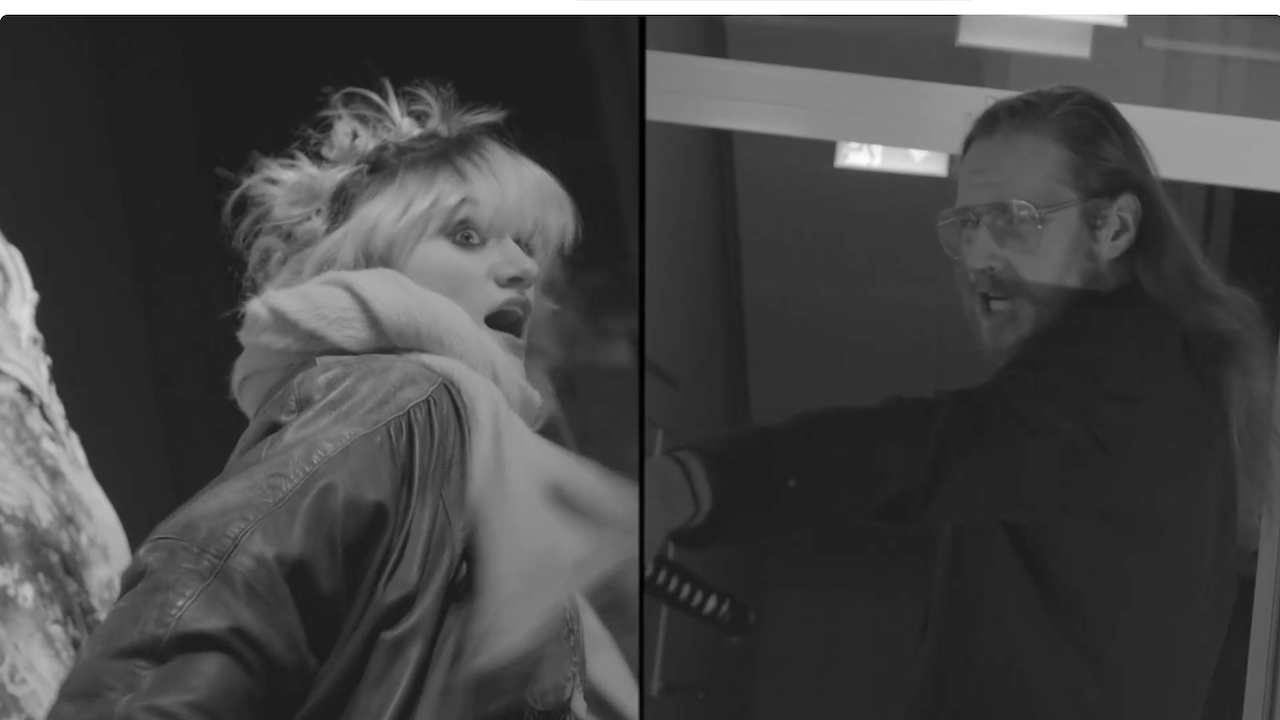
Still from the film Kampfkunst im Kunstkampf

Clicking loads content from YouTube · data is transmitted to Google

Script · Editing · Sound design

Kampfkunst im Kunstkampf

This project parodies our application process at Mainz University of Applied Sciences and follows Viktoria's escalating admission interview at the art academy. The debate about one's own art keeps building until the two end up in an all-out fight.


October 2024
Three genres in one film

Drama, comedy and action!

The biggest challenge was bringing three visions together, as we'd been thrown into teams at random. The film works above all because of the sound design, deliberate editing and conscious exaggeration. We shot for two days at an arts-focused grammar school in Alzey.

The behind-the-scenes video shows how it came together: on the one hand clips from the rough cut, and on the other rehearsals during the shoot.

Since the stylistic devices are hard to reconcile, the sound design served as the connecting thread between them all. Using exaggeration as a device makes the acting work and lets the comedy shine. On this project the rough cut came first and the music second, so that the images could convey the plot and its conflicts as effectively as possible.

Script, editing, sound design Luis Steinhilber
Script, directing, set design Loki Stanic
Script, camera, lighting Faven Weber
The professor Robert Mank
The art student Viktoria Porten
Many thanks for the support Dagmar Ried – Kunstgymnasium Alzey
Editing and sound design Davinci Resolve
Interested in more projects?

I look forward to hearing from you!

✉️ Send an email